
Plainfield Directory Years on Record
Plainfield city directory research spans several collections, not one complete shelf. The legacy Plainfield Library list visibly identifies early and mid-century runs, while the Indiana State Library lists later Robinson volumes. The dates below are the years confirmed in those collection descriptions. They are visible holdings, not a claim that no other directory was printed.
| Collection | Years | Where Held | Access |
|---|---|---|---|
| Older Plainfield directories | 1870-1873, 1879, 1881, 1884-1887, 1911-1922 | Plainfield Library local history | Legacy list; ask staff for the volume |
| Mid-century Plainfield runs | 1949-1951, 1953, 1955-1957, 1960, 1962 | Plainfield Library Indiana Room | Collection-specific, staff help available |
| Robinson city directories | 1960, 1963, 1965, 1971, 1974, 1976, 1978, 1980, 1982, 1984-85, 1988, 1990 | Indiana State Library | Reference access, call numbers ISLI 910 P698R/P698RA |
| 1955 adult-male census | 1955 | Plainfield Library | Separate local snapshot, not a federal census |
The earliest year confirmed in the legacy list is 1870, and the latest State Library run found is 1990. The 1980 Robinson item is marked as a tax-list supplement. Because the full older table did not render during research, request the exact year before traveling. The complete publisher history and final printed year remain unverified.
Plainfield City Directory Research Desk
The Plainfield Library Indiana Room is the strongest local starting point. It holds more than 18,000 books plus vertical files, maps, and microfilm at 1120 Stafford Road. Staff can be reached at 317-839-6602 ext. 2114 or askindiana@plainfieldlibrary.net. The broader genealogy collection identifies directories, obituaries, newspapers, cemetery files, marriage material, voting records, and school sources.
Access varies. Ancestry Library is limited to in-library use, while the historic Indianapolis Star collection can be used remotely with a library card. Other databases have their own terms. The posted Friday hours read "9:00pm-6:00pm," an internally odd display. Confirm Friday access with staff instead of silently treating that text as correct.
Reading Plainfield Directory Entries
No actual Plainfield directory page rendered during research, so the exact columns, symbols, and abbreviations cannot be stated as observed facts. Inspect the title page, publisher key, and the page that contains the entry before recording details. A useful inventory keeps only fields that the volume truly prints.
| Person or business | Copy the spelling and initials exactly as printed. |
|---|---|
| Street address | Record the house number, street spelling, and directory year. |
| Household note | Record a spouse or relationship only when the volume states it. |
| Work notation | Transcribe an occupation or business only when present. |
| Page and key | Save the page number and the volume's own abbreviation key. |
- Criss-cross directory
- A section arranged by street or address rather than by surname.
- Householder index
- An address-oriented list of the household name printed for that year.
- Abbreviation key
- The publisher's guide to shortened words and symbols. It controls how the entry should be read.
Plainfield Directory Companion Records
A city directory gets stronger when paired with a record made for a different reason. Plainfield Library lists a digital Plainfield High School yearbook run from 1951 through 2018, graduates from 1934 through 1979, and alumni deaths through 2023. Its Plainfield Messenger run covers 1960 through 1979. Marriage applications from 1905 through 1950 can include applicants and parents.
- Use obituaries and cemetery files to test a family link.
- Use yearbooks to establish school membership, not a home address.
- Use newspapers for dated events and street references, while noting OCR errors.
- Use deeds or transfer cards to track a parcel owner, not an assumed occupant.
- Use vital indexes as leads and the custodian for an eligible certified copy.
HeritageHub is described by the library as covering obituaries and death notices from 1704 to today. A family-supplied notice still needs support from a death record, cemetery entry, or contemporary report. Preserve the publication, date, page, and database name.
Mapping Plainfield Directory Addresses
Main Street began as part of the National Road, surveyed in 1827 and built in 1830. Plainfield's early layout included eight blocks and 64 lots. Those facts matter because a modern street string may not match the form used in an older city directory. Sanborn maps can show a building outline, use, construction, floor count, street name, and house number. The Plainfield map inventory also lists a 1969 aerial, a 1970 Valley View Apartments map, and 1992 Plainfield and Guilford Township aerials.
The Town maps and plans page links modern planning viewers. It helps distinguish Town limits from a Plainfield mailing address. The page below shows the current map-and-plan route. Use it to bridge an old directory address to civic geography, but do not treat a modern parcel owner as the historic occupant.
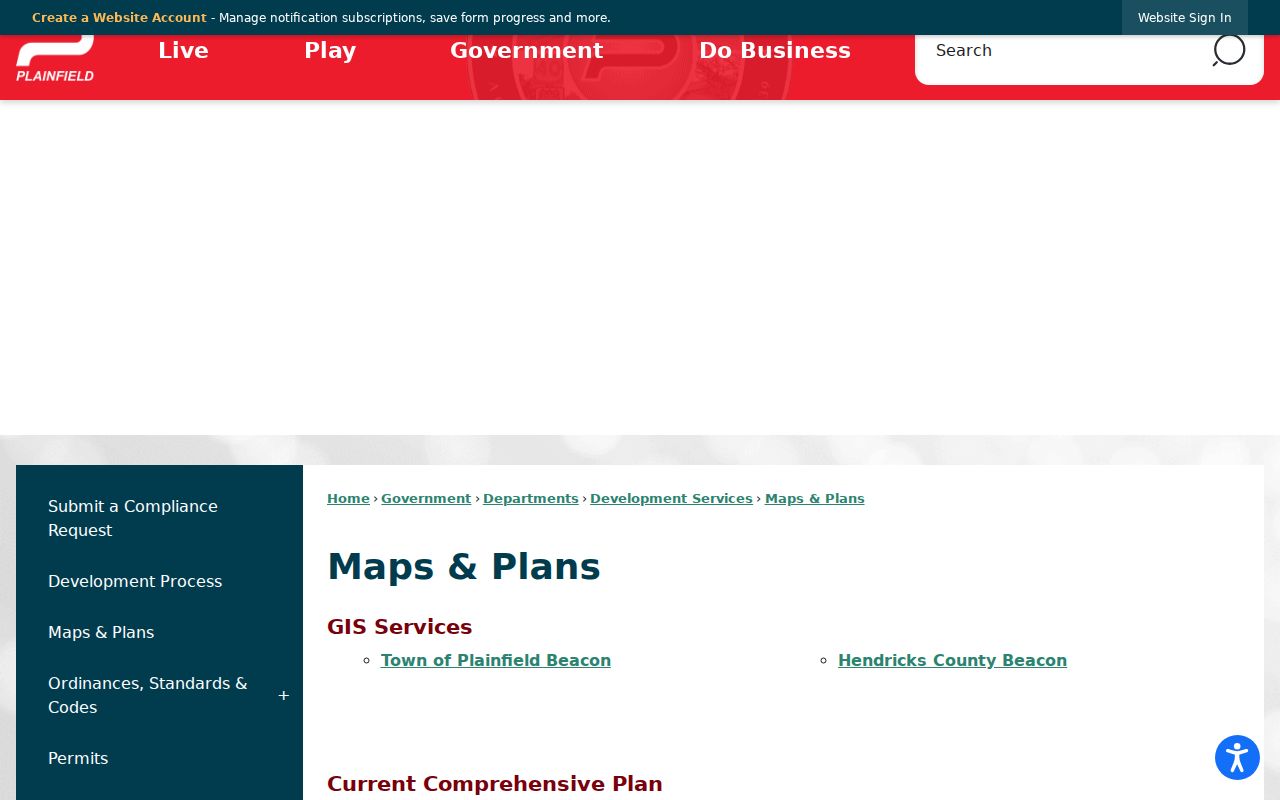
The current planning surface adds boundary context that a printed directory cannot provide.
Trace Plainfield Families by Directory
Follow a household through dated sources without turning gaps into guesses. A missing name can mean a move, death, changed spelling, skipped publication, or a person who was not listed. The 1955 local adult-male census has a narrower scope than a federal census and must be labeled that way. Under the federal 72-year rule, the 1950 census is the latest public decennial census as of the research date.
- Fix the Plainfield street spelling and the likely year.
- Search the surname and the address side of the volume, if both exist.
- Compare the years before and after, keeping each printed form of the name.
- Pair the result with a released census, newspaper, obituary, or cemetery source.
- Bridge the address to deeds or maps only when parcel history matters.
- Record the book, page, collection, date, and whether the item is an index, scan, or original.
The complete historical shelf belongs in this workflow. For modern address-keyed parcel work, use the Plainfield street directory lookup instead of extending an old entry into the present.
Plainfield Records Beyond Directories
The Hendricks County archive reaches back to early county government. It includes wills from 1822, marriage licenses from 1824, land entries from the 1820s, and later tax, transfer, court, and school series. The State Library county guide points to marriage books, birth and death indexes, wills, and Clerk originals. These sources can confirm a relationship or date that a directory merely suggests.
A 1971 Plainfield Library newsletter reports that the county records commission inspected courthouse-basement records, funded an identification effort, and received a favorable state historian assessment. No official courthouse-fire source was found. Cite that preservation account without adding a fire story. A failed scan should be labeled as a scan gap, not filled from inference.
Today's Plainfield City Record Trail
Municipal files will become part of Plainfield's future city history. The Agenda Center can be searched by date, term, and board category. Its categories include Town Council, Plan Commission, zoning appeals, redevelopment, utilities, stormwater, police commissioners, and economic development.
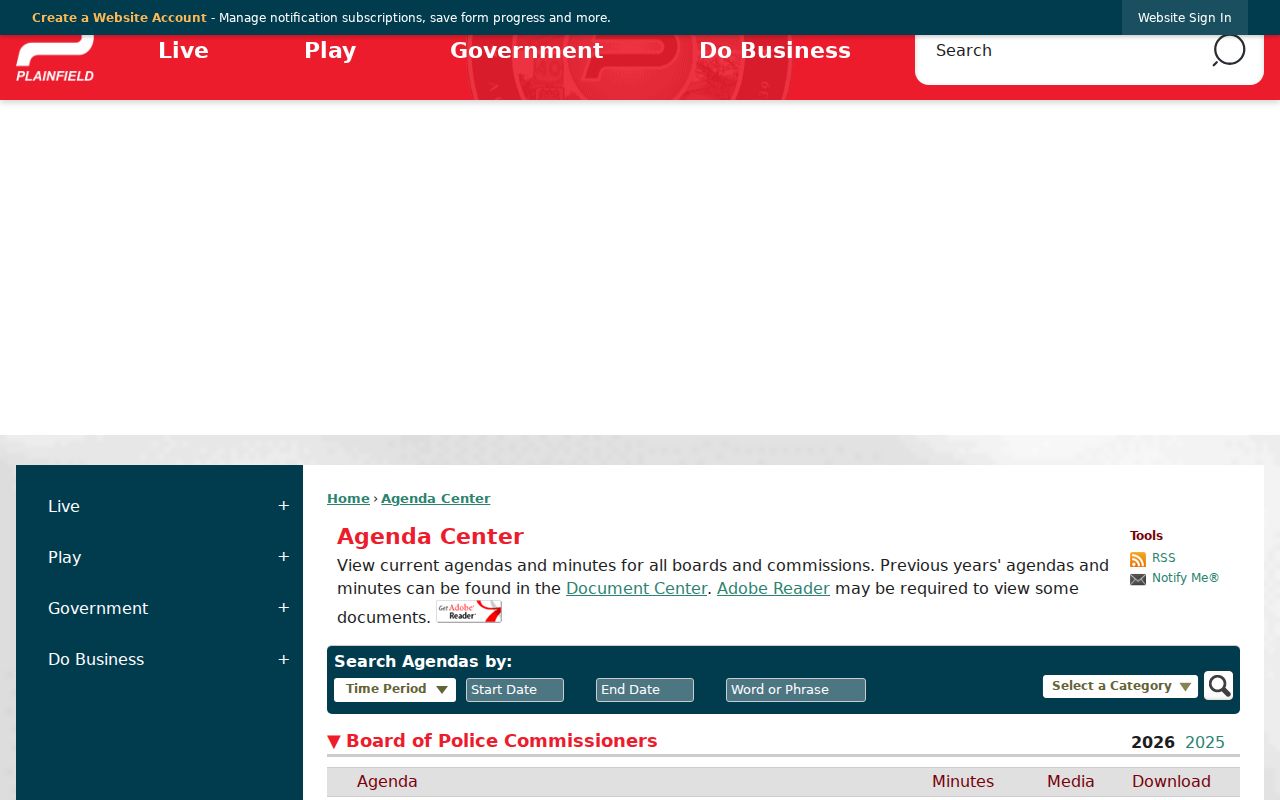
Agenda attachments can date when a parcel, street, institution, or civic project entered the public record.
For an existing municipal file, the Plainfield JustFOIA route carries requests to the Town. Ask for a department, date span, address, parcel, permit, agenda item, or case number. The Town is not required to create a new analysis.
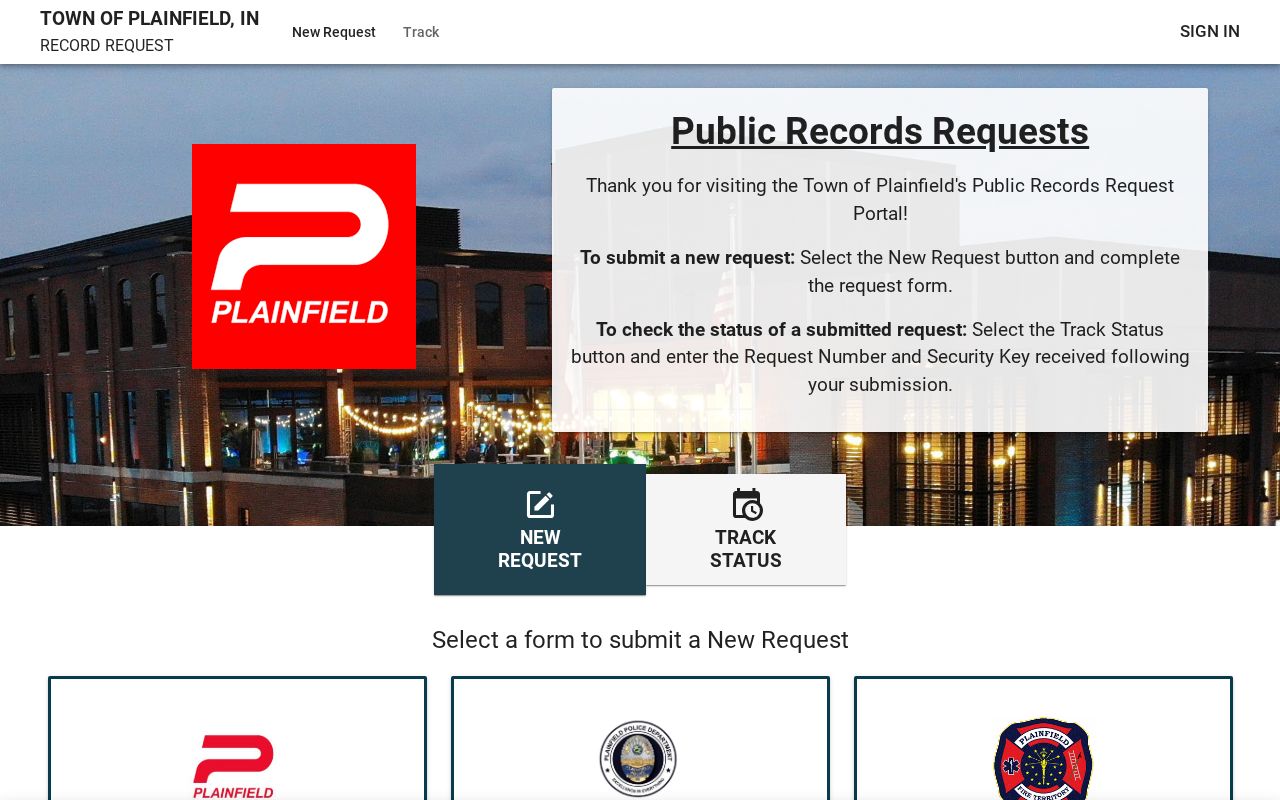
The request portal is a fallback for existing Town records, not a searchable household list.
Plainfield Permits and Court Records
The Town permit page groups utility, residential, commercial, demolition, fire, and site work. Permits apply within Town limits and document work, not who occupied a home. The page is useful when a building change explains a gap between maps or directory years.
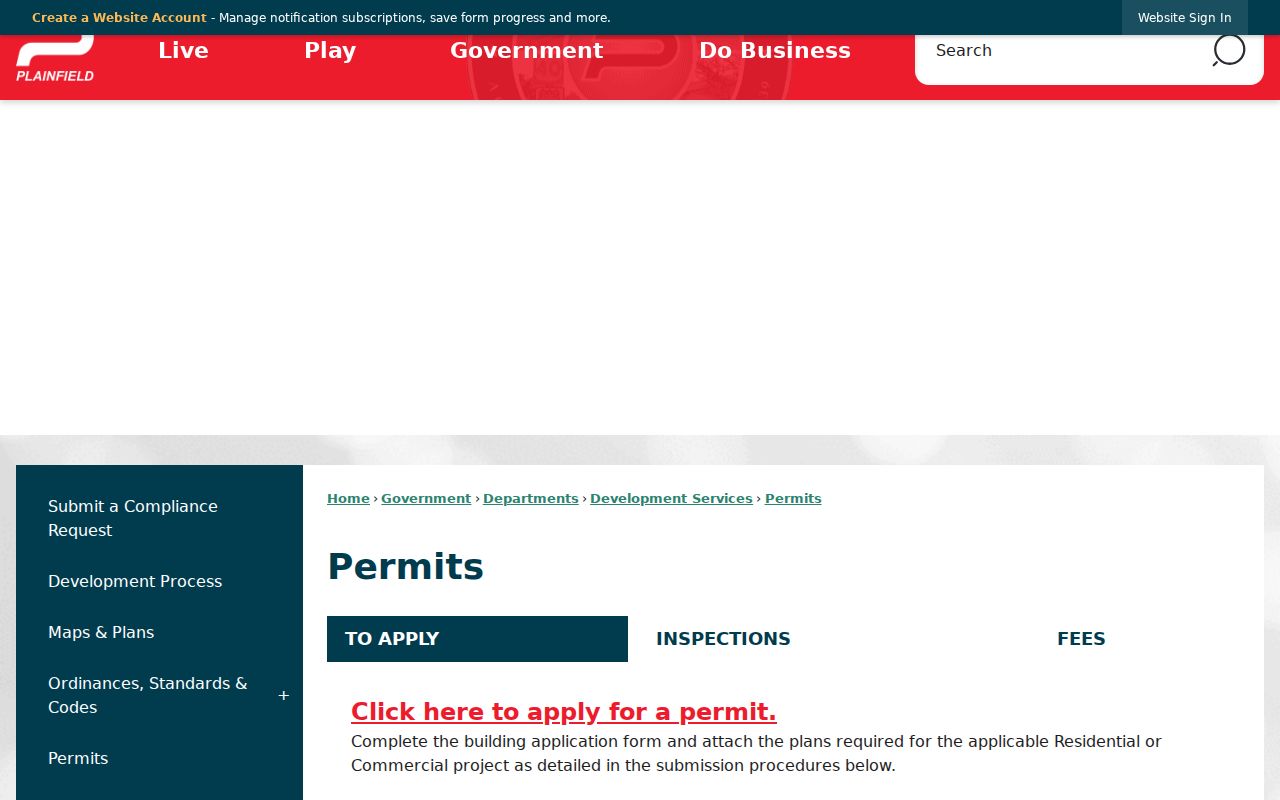
The category list helps identify the department and record type for a precise request.
Inspections and online permit functions use the Plainfield iWorQ portal. Its permit, resubmittal, inspection, and payment routes are separate, and complete historical public coverage was not established.
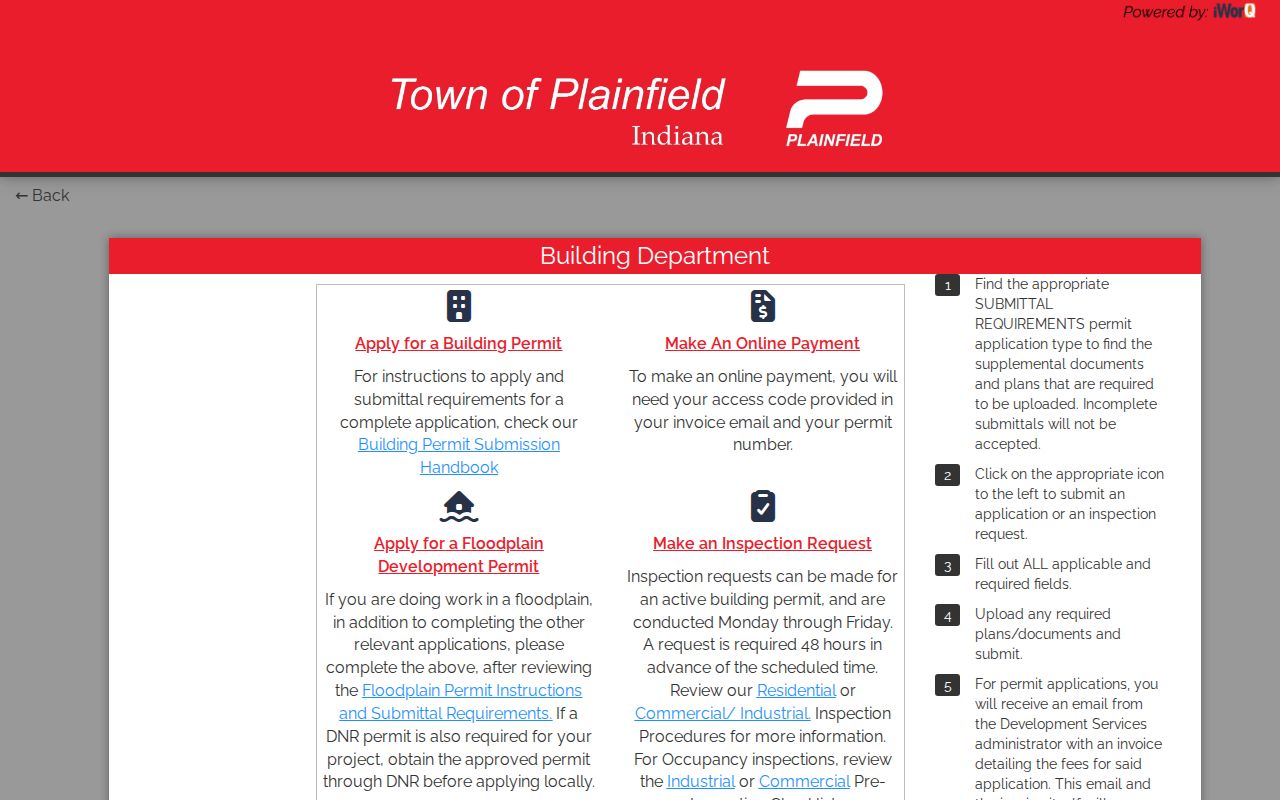
The portal screen confirms an access route, while the Town remains the source for the underlying file.
Plainfield Town Court handles traffic infractions, ordinance violations, and misdemeanors. It was established in 1989. Its public page gives forms, schedule, and contact details; case research should use MyCase or the Clerk.
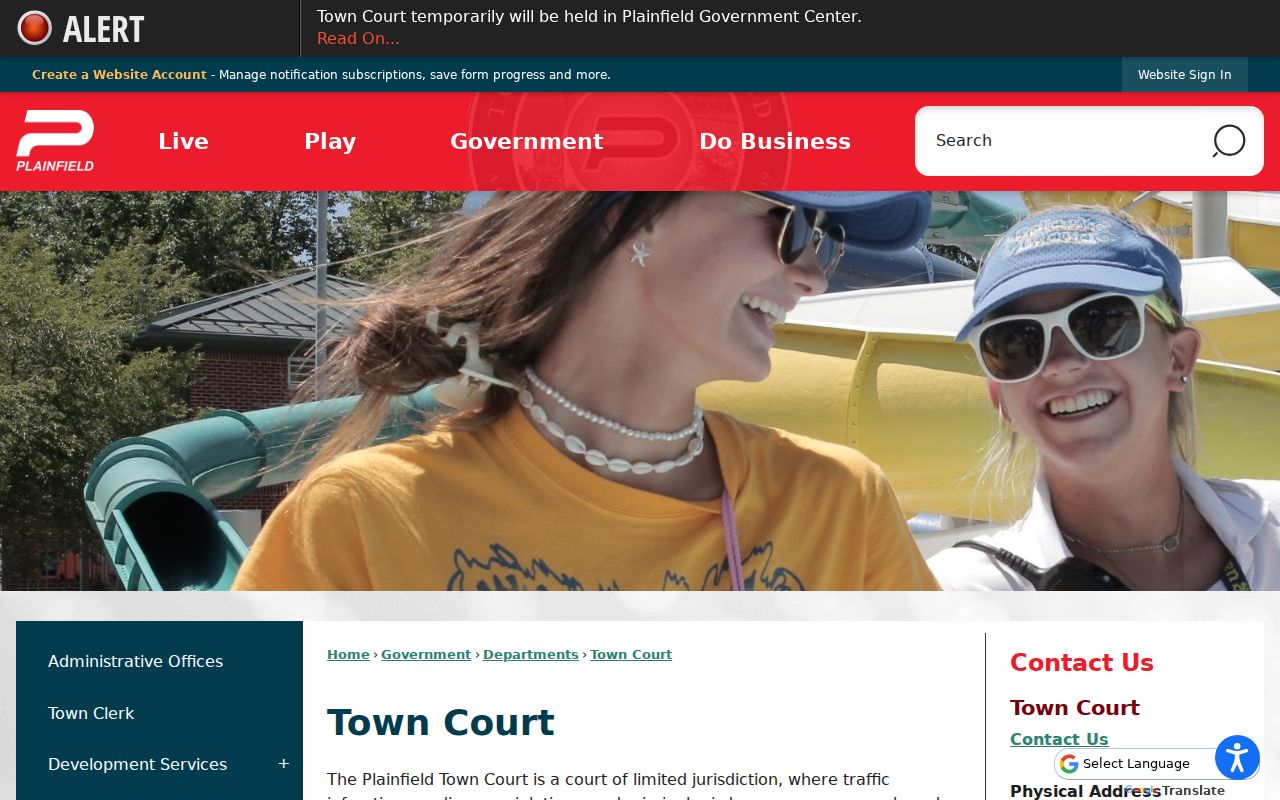
The court page gives local context but does not replace the official court file.
Plainfield's Future City Directory
Current civic projects leave the same kind of dated trail that later researchers will seek. The 2026 Fire Station 124 release, Echo Hollow plan, and Saratoga resurfacing award connect press notices with plans, meeting records, maps, and parcels. Save the publication date and treat each notice as time-sensitive.
The Town Maps and Plans screen is a useful starting point for that work. A current project can later be followed through an agenda attachment, permit, inspection record, and updated map. Future family and place research will be strongest when each record keeps its date, department, parcel, and source URL.